The Argentina series is expected to be quite lengthy, so I’ll be breaking it down into several posts. The journey covers the capital, Buenos Aires, Iguazu on the Brazilian border, El Calafate in Patagonia, Ushuaia—the gateway to Antarctica, and Bariloche, often called South America’s Little Switzerland. My posts will essentially cover everything from food and accommodation to transportation and general survival in Argentina.
This first installment focuses on my pre-trip preparations and my memories of the capital, Buenos Aires. I want to document as much as possible, so bear with me—it’s a long one.
Note: This article reflects my personal views and totals approximately 12,000 words.
I. Planning & Preparation
I started planning the trip in October. Originally, I was dying to go to Mexico because early November coincides with the Day of the Dead. I was in Chiang Mai around that time last year and happened to watch Coco, which left me completely obsessed with experiencing the festival firsthand.
Mexico’s visa policy allows entry for those holding valid US visas, long-term Schengen visas, or Japanese visas valid for three years or more. However, I’d heard stories of people being deported even with the three-year Japanese visa (which turned out to be true—a girl I know later tried to enter Mexico from Argentina with that exact visa and was sent back). Plus, for South America, transiting through the US offers more flight options and cheaper prices. So, I tried my luck and applied for a US visa again. Well, I was rejected. Again.
It’s honestly kind of hilarious. If you’re a woman and don’t have much self-confidence, go apply for a US visa. The rejection reason is almost always the same: they don’t think you have enough “binding ties” to your home country, implying you’re likely looking for a green card marriage. When I told my friends back home, they joked that my style and vibe alone make me look like someone heading out to do exactly that—I was literally laughing through the tears. Later, chatting with V in Argentina, she mentioned how expensive New York is. I told her I had stubbornly tried for the visa again and failed, jokingly saying the US Immigration Bureau must have known I was broke and was just trying to save me money lol.
I asked V if green card marriages were really that common in the US. Her answer was a resounding yes. She told me that since many local men struggle to find partners, there’s an entire industry built around it. It’s a bit like the “Vietnamese bride” phenomenon—on a global scale, the logic is similar. Population flows with the economy. As women in developed countries become more self-aware and selective, men who still have traditional partner needs but average means look toward other countries.
Back to the visa: despite the US rejection, I had a backup. I had bought tickets for a conference where the organizers partnered with the government to provide a one-month visa waiver—similar to the waiver granted to US visa holders. This waiver let me stay for a month. Since it was too late to apply for a Mexican visa, I scrapped the Day of the Dead plans and flew straight to Argentina.
China Eastern recently launched a Shanghai-Auckland-Buenos Aires route, but the timing didn’t work for my schedule. I chose Turkish Airlines: Shanghai to Istanbul, a 17-hour layover, then Istanbul to Buenos Aires with a stop in São Paulo. Total travel time: 12 + 17 + 18 = 47 hours. In all my years of flying, this was the first time my feet actually swelled up. It was funny—on the second leg from Istanbul to BA, I tried to change shoes and wondered why they felt so tight. I realized it wasn’t the shoes; my feet had turned into little steamed buns.
I made a mistake. Before the trip, a friend warned me about poor circulation and the risk of blood clots on long flights. So, I bought compression socks for the first time. However, I think the swelling was actually caused by wearing them wrong. I bought the footless kind (ankle to thigh). I later learned that due to gravity, hydrostatic pressure is highest at the ankle. Compression socks should cover the ankle, not have the cuff digging into it. Naturally, I did the latter. Learn from my mistake: if you’re traveling long distances, don’t get fancy and end up making things worse.
 The green part is my socks🤣
This was my first time flying Turkish Airlines (I took China Southern to Turkey previously). Honestly, the experience was great. The food was good, and the amenity kit included socks, slippers, a toothbrush, toothpaste, and an eye mask. Also, because my layover was so long, Turkish Airlines provides free meal vouchers every five hours for connecting passengers. You just go to the service desk and then take the voucher to the food court. It’s mostly fast food—pizza, sandwiches, burgers—but you can’t complain when it’s free.
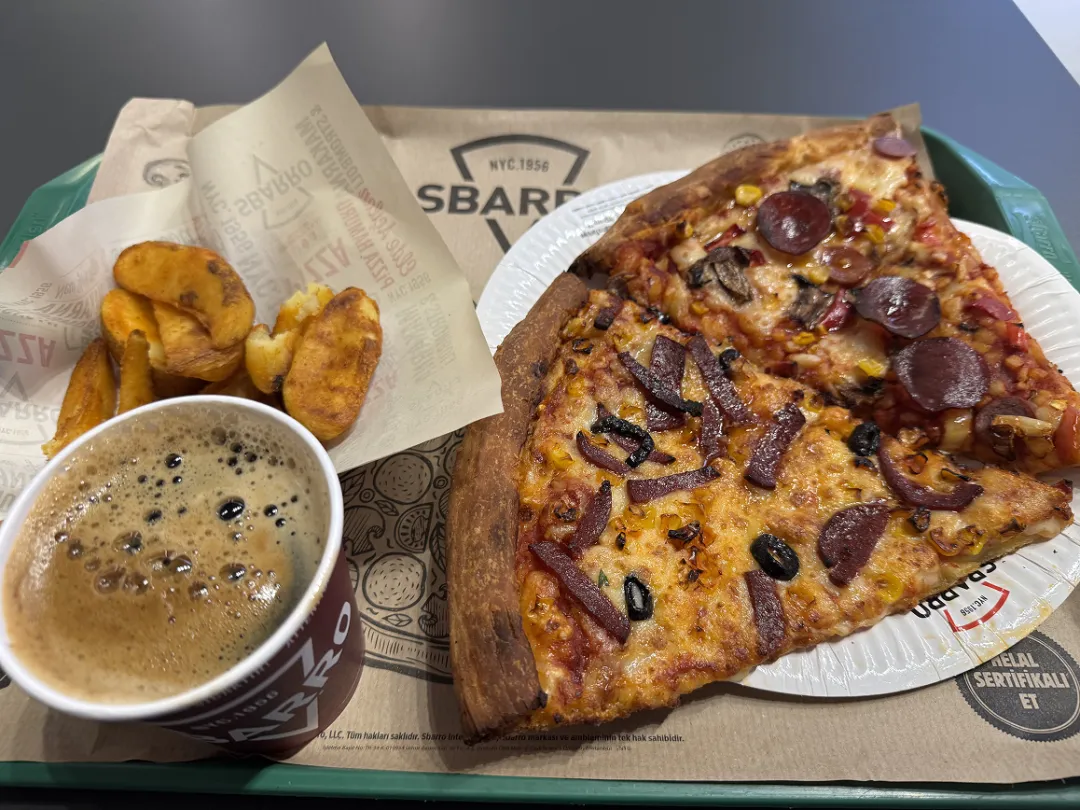 The free airport transit meal they were offering included an extra piece of bread for me to try! 🤣
Additionally, Turkish Airlines provides 4 or 5-star hotel stays for layovers exceeding a certain duration, but our itinerary didn’t meet the rules. Hotel opportunities are fewer and come with more constraints, and you need to leave the airport and apply for a Turkish e-visa. If you’re interested or your schedule fits, you can check the Turkish Airlines official website or contact their customer service directly.
Transiting through Istanbul reminded me of my first time traveling abroad. I remember being at this airport with no internet, sleeping on the floor, and sprinting for ten minutes from one end to the other to catch a flight—it feels like a lifetime ago. Two years later, the difference is that I’m no longer afraid to travel alone, and this time I wasn’t alone anyway. Because of those past struggles, I knew the layout of the airport like a fish in water. For instance, while waiting with my friend, I mentioned how I once slept outside security. Because of my previous experience going to the wrong gate, I knew exactly which areas had lounge chairs, charging ports, and fewer people. I even walked to the old gate and described to my friend how I once navigated the entire airport to make my flight. All those memories felt so vivid yet the feeling was completely different—that’s growth.
Since we were heading to Argentina, there was some lingering anxiety—not about South American safety (opinions on that vary wildly, but friends in BA told me Palermo was fine)—but about whether my special waiver letter would actually get me through immigration.
A week before leaving, I heard that a colleague of my friend (Russian or Serbian) was flying Turkish Airlines from Belgrade to BA. During his Istanbul layover, the airline refused to let him board the second leg despite him providing proof of accommodation. The poor guy ended up “healing” his broken heart in Thailand instead. Then, two other people I know were questioned three times: at check-in, security, and the gate. The staff scrutinized their flight and hotel booking dates to verify their “intent.” Luckily, they argued their way onto the plane.
Naturally, I was terrified we’d get rejected at the gate too. But it was much smoother than expected. Leaving Shanghai was a breeze; the check-in agent showed my waiver to a Spanish-speaking colleague and cleared me immediately.
I think part of it was that my documentation was solid, and the Argentine Immigration office had conveniently posted about the special waiver on their website just days before. If the airport staff don’t know the rules, they won’t let you through, as airlines face heavy fines for transporting passengers who get deported. Still, there was one last check before boarding where I had to show proof of accommodation and a return flight. My internet was acting up, and I was so nervous that my hands were shaking as I showed the documents to an agent whose English was limited. Looking back, it was pretty dramatic for no reason.
Our flight had a stop in São Paulo. I saw people getting off and thought we had to deplane too, as is common in China. Plus, a friend had told me a horror story about Brazilian ground staff being so incompetent that he missed his connection. Wary of South American efficiency, I double-checked with a flight attendant and found out we stayed on board for the BA leg. The 90-minute wait on the tarmac was pretty miserable though—you’re just stuck there, and the smell of refueling isn’t exactly great. I’m glad my return flight takes a different route.
II. Buenos Aires: First Impressions
I didn’t expect to love Buenos Aires (BA) as much as I did. The reason is simple: Jacarandas. They made me feel like this was “my” city. I landed at BA in the early hours of the 6th, so I didn’t see much besides the dark outlines of the city.
From Ezeiza Airport to the city center, it’s about a 40-minute drive. Taxis might take the “scenic” route, so I recommend Uber, DiDi, or Cabify. Uber is usually the priciest; Cabify is more localized. It’s worth comparing.
At first, looking out the car window, the road from the airport looked like the urban sprawl of Southeast Asia. But once we hit the city—specifically Palermo—it felt very European. The plane trees lining the streets and the vintage architecture actually gave me a massive flashback to Nanjing. I posted a photo on WeChat with the caption “I’m in Nanjing,” and half my friends actually thought I had already flown back to China.
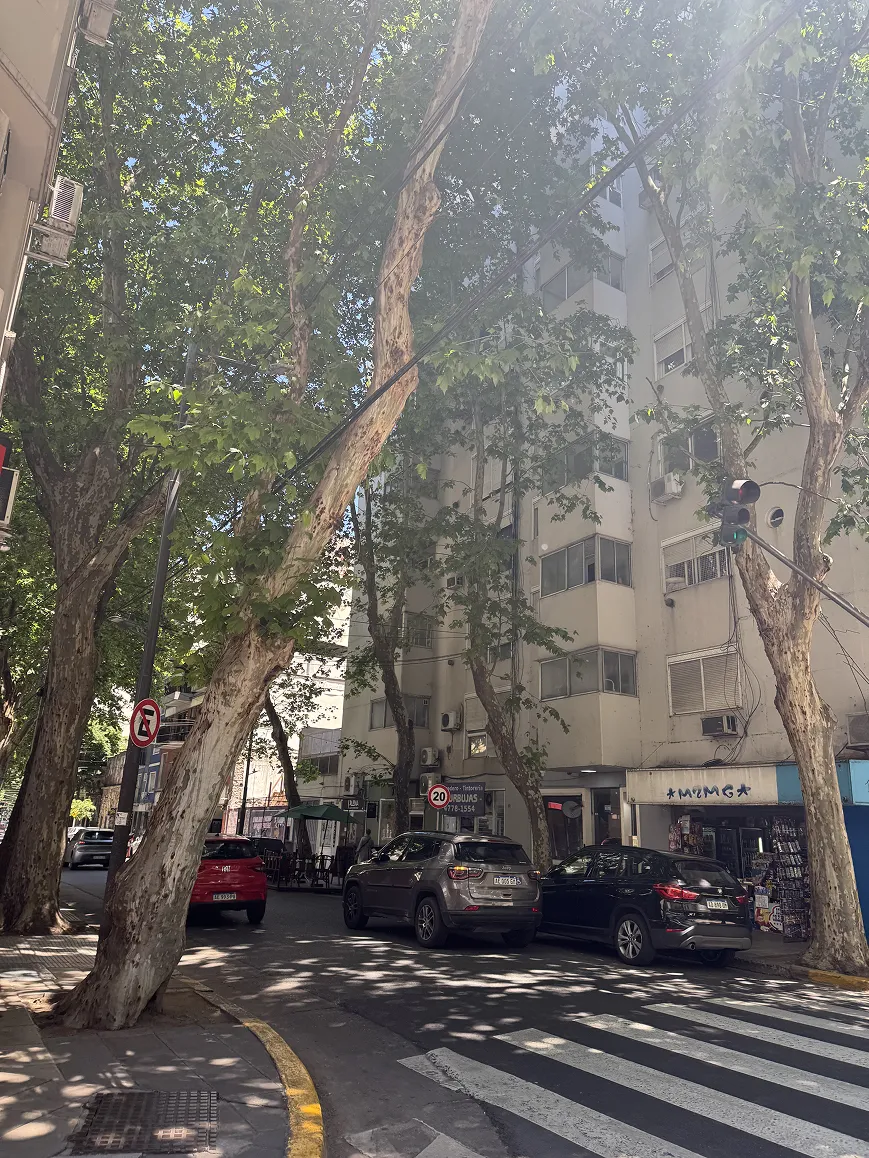 *The street view is really similar to Nanjing *
I discovered the city was covered in Jacarandas one day while walking to the supermarket with my friend V. We turned a corner onto a main road, and a canopy of purple hit me. Under the sunlight, the lush green leaves paired with thick purple blossoms against the bright blue sky and pale yellow walls were breathtaking. It reminded me of the flame trees in Chiang Mai—but while those are full of “life-orange” energy, the Jacarandas of BA are all about “elegant-purple” tranquility.
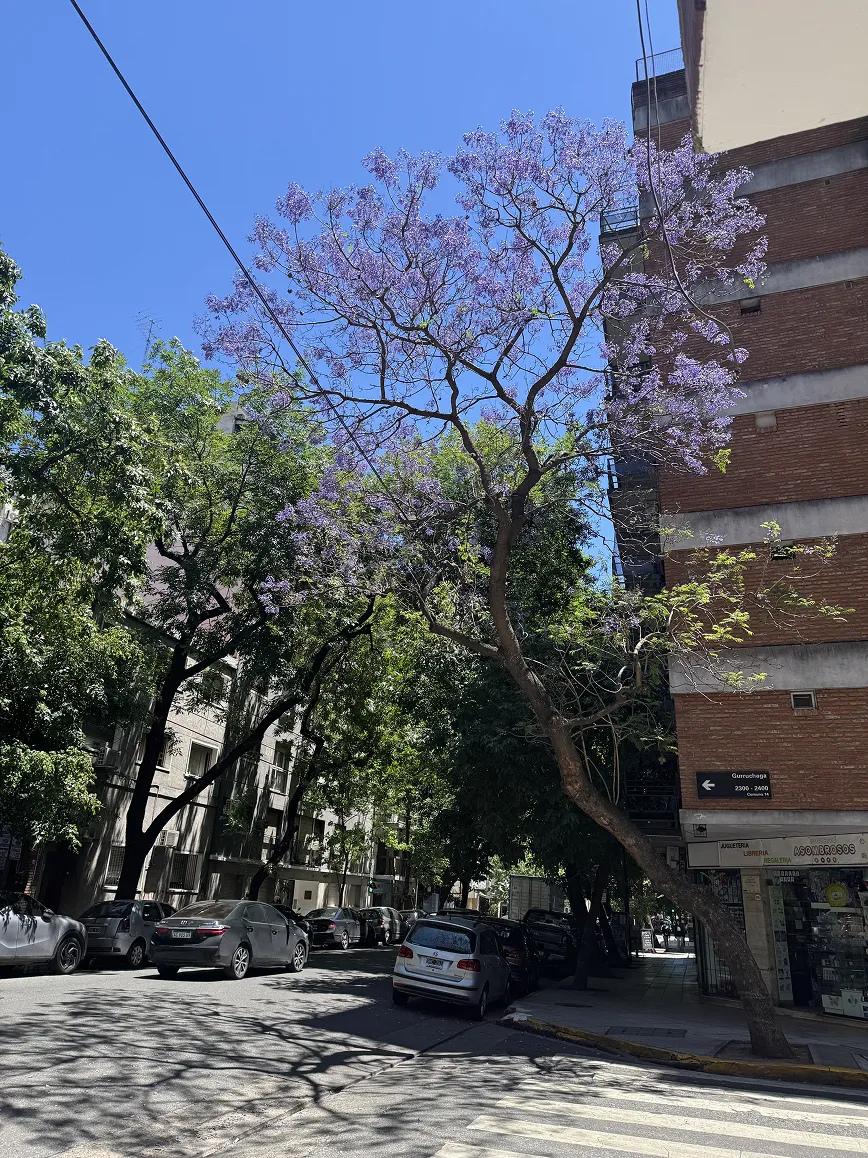 love it💜
III. Living in Buenos Aires: Food, Housing, & Transport
🏠 Accommodation
Palermo is the neighborhood all the locals recommend. The streets feel European—cobblestones, classic architecture, and sidewalk cafes/bars that give the area a distinct vibe. The famous writer Jorge Luis Borges grew up here. Our Airbnb was right near a restaurant mentioned in his stories; we passed it every day but somehow never managed to eat there lol.
With Argentina’s inflation, prices are skyrocketing. However, while food prices now rival or exceed those in Europe, housing is still relatively cheap—especially Airbnbs. We stayed in Palermo for about 100–200+ RMB per person per night. To put that in perspective, a decent dinner out will easily cost you 20,000+ Pesos (over 100 RMB) per person. However, the issue with Airbnbs is the soundproofing. Honestly, I think it’s a city-wide problem with the older buildings.
I started in a hostel my friend booked for an event; the room was like a courtyard setup, and I could hear every single person walking or chatting outside. One morning, I woke up to the surround-sound snoring of the guy in the next room. After my trip to Iguazu, I ditched the free housing and moved in with two other friends. I thought the hostel was just a one-off, but the Airbnb we moved to—which was literally at street level—was no better. You could hear pedestrians’ conversations through the window as if they were in the room with us.
Later, I visited V at her apartment in Palermo Hollywood (a pricier area). She complained about the same thing. I was sitting on her sofa working while she napped upstairs, and I could hear the neighbors chatting outside with crystal clarity. Sadly, I don’t speak Spanish, or I would have definitely eavesdropped.
🛍️ Shopping
They say food is heaven, and I take that literally. Because BA is expensive and my Airbnb had a kitchen, I picked up my chef’s knife again. I’m not exaggerating: 70% of my luggage was food—instant noodles, rice vermicelli, sauces, and miscellaneous “useful” snacks.

My friends mocked me at first, thinking I overpacked. They were wrong. I brought a box of dried plums (hua mei), which became a crowd favorite. Then there’s my friend “Sister F,” the typical “big talker but weak stomach.” She thought bringing 20 packs of noodles was ridiculous, arguing we should be eating out. But by the end, she was the one craving noodles the most after getting tired of all the meat.
There was one hilarious night when Sister F wanted to hit the bars. We went out, had one cocktail each and some fried mushrooms. As soon as we stepped out, she turned pale and told me she couldn’t walk. I was worried she was going to keel over, but I also really needed to find a bathroom. I asked if she could hang on, but she was dizzy and nauseous. The other three of us were fine. Since she’s notoriously fragile when it comes to alcohol, I ended up piggybacking her for a stretch. The sight of it made her laugh so hard she regained enough strength to stumble home. Once back, she felt sick again until she ate one of my dried plums. Pro-tip: dried plums are a lifesaver for nausea.
Grocery shopping became my main entertainment. Supermarkets and wet markets are the best way to understand local life. I loved wandering around Coto because it’s affordable and has everything. Most supermarkets sell pre-cut meat, but at Coto, you can pick your cut and have the butcher slice and weigh it for you. I also tried Jumbo and some Chinese grocery stores, but Coto won on variety and price.
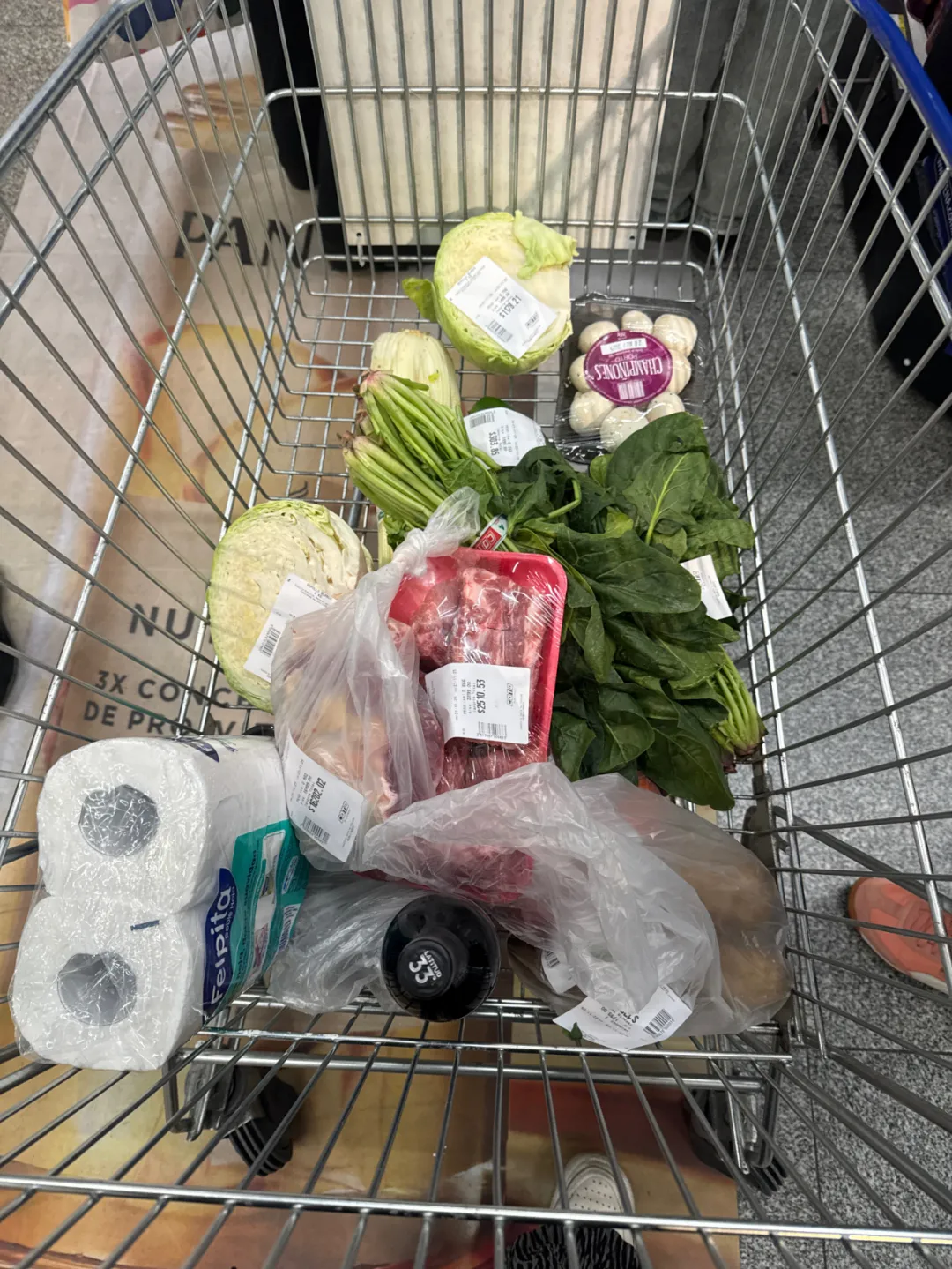
If you want cheap produce, the local fruit and veg shops are better, though quality varies. Some sell stuff that’s clearly past its prime, so you have to be picky. If you’re not a total carnivore, finding high-quality fresh veg in BA requires some research.
 classic combination,Asadao + mix salade
Here’s the breakdown on grocery prices: Meat is relatively cheap. I got a 1kg ribeye for 16,000 Pesos (about 80 RMB). Pork bones and ribs are a steal—700g of ribs cost me about 10–15 RMB. Milk is also cheap, similar to Europe. Interestingly, the fat content is color-coded: green is lowest, then orange, then red. Wine is also incredibly cheap—sometimes the same price as water. The expensive stuff? Industrial processed goods like chips and candy. A bag of Lay’s (148g) was about 25 RMB, whereas it would be 10 RMB in China.
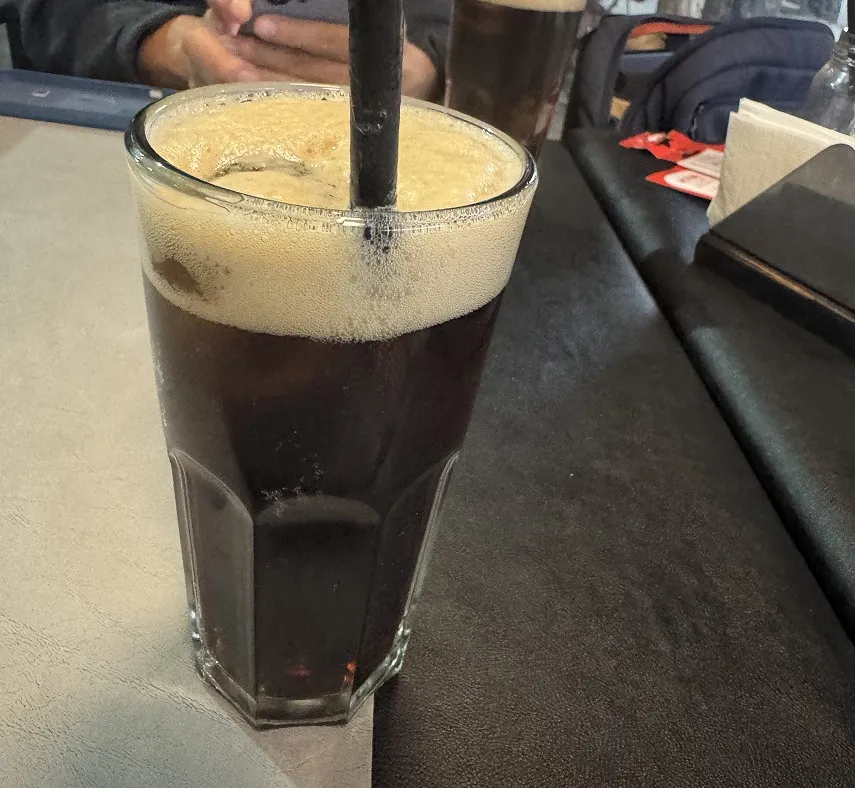 Specific drink,Fernet con cola
My biggest complaint? The coffee. I expected greatness from a country that neighbors major bean producers, but the coffee in BA was generally terrible. I usually drink black coffee, but I was forced to switch to milk-based drinks because the black coffee was so bad. And even the lattes were hit-or-miss—the foam was often coarse and soapy rather than silky.
Overall, except for the meat, my friends and I gave BA food a pretty low rating.
🚶 Safety & Transportation
If Istanbul is the city of cats, Buenos Aires is the capital of dogs. You see professional dog walkers everywhere—sometimes one person wrangling 15 dogs at once. It’s a spectacle. But while BA loves dogs, not all owners pick up the poop. Walking the streets (especially at night) is a constant game of “dodge the landmine.”
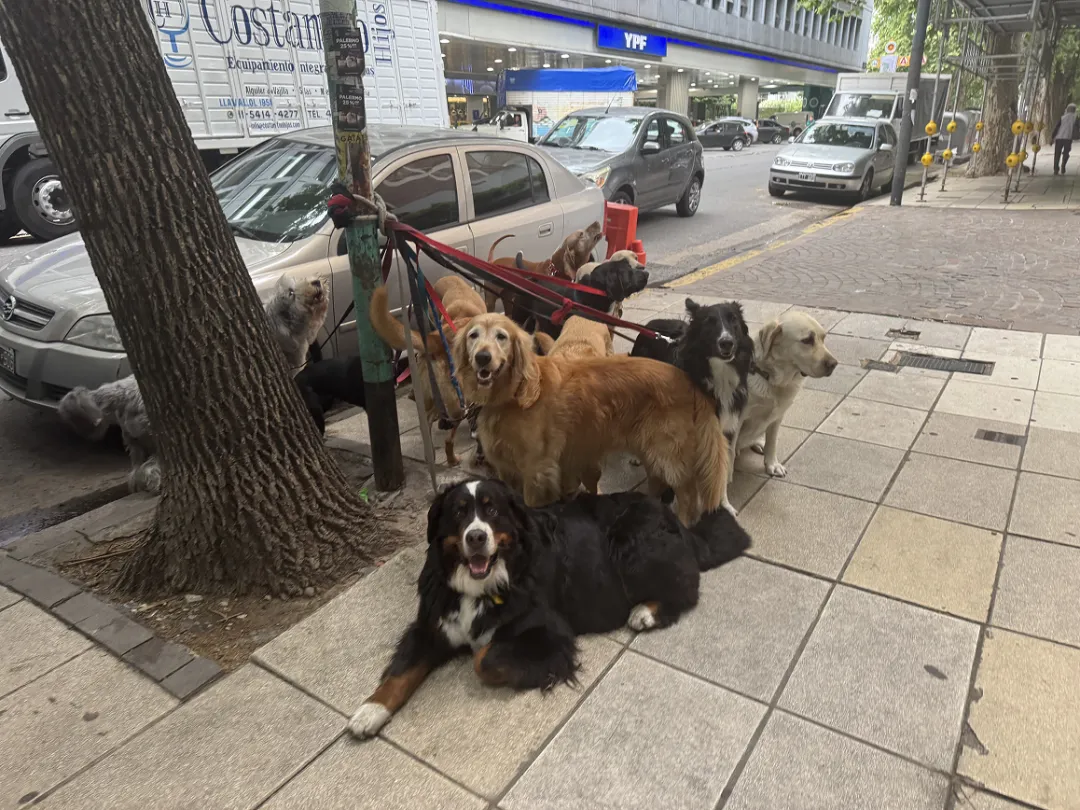 Auntie was absolutely overjoyed!
Speaking of safety, we developed a weird theory: the more dog poop there is, the safer the neighborhood. It means people have the leisure time to walk their pets. My friends who go for morning runs in the park confirmed there’s poop everywhere, and Palermo is the same.
Common travel advice says to stay in the city center for safety, but in BA, it’s the opposite. The city center (near Plaza de Mayo) can get sketchy, especially at night. Palermo is the gold standard for safety. It’s where the middle/upper class, expats, and young professionals live. There’s a heavy police presence; seeing security guards in bulletproof vests is normal. That said, it’s not perfect. I saw a security guard chasing a thief once, and V told me about a guy who got punched and robbed in broad daylight.
For transport, we mostly used apps. Uber is okay, but Cabify and DiDi are popular too. Base fares start around 15 RMB. Because of the one-way street system and constant red lights, walking is sometimes faster than driving. I also tried moto-taxis (booked via apps) twice. They provide helmets and are faster at weaving through traffic. That said, they aren’t nearly as “wild” as the moto-taxis in Bangkok. Thailand still holds the crown for chaotic biking 😹.
Public transport involves the SUBE card. You can get one at kiosks, though they charge a premium. I just used Apple Pay for the buses in BA—super easy.
☎️ SIM Cards & Payments
My phone is a Chinese model, so no eSIM for me. In BA, I found that buying a SIM card locally is about 1/3 the price of buying one on Taobao.
I bought a Claro card at a kiosk. The pricing was baffling: V bought one for 2000 Pesos. Three days later, I took a friend to a different kiosk and it was 2000. Two days after that, it was 1700. Another two days later, 1200. It was the exact same “Tourist SIM.” But hey, this is Argentina—the land of magical realism and hyperinflation.
A 15GB + 1000 mins plan for one month cost about 9600 Pesos. Total cost (including the card) was about 11600 Pesos (60 RMB).
Digital payments are advanced, though bugs are frequent. Mercado Pago is the “Alipay of Latin America.” I brought US dollars as a backup. Since April 2025, the gap between the “Blue Dollar” and the official rate has narrowed significantly, making it easier to get dollars through official channels.
You can exchange cash at Chinese supermarkets or official exchange houses. People on the street will also shout “Cambio!” at you. Be careful with street exchanges; some people report getting shortchanged. Cash is still king in many restaurants, often getting you a 10% discount. If you worry about the Peso’s devaluation, bringing USD cash is never a bad idea.
⛰️ Sightseeing & Attractions
Over my stay, I hit the big ones: the Obelisco, Teatro Colón, Recoleta Cemetery, El Ateneo Grand Splendid, El Rosedal Garden, and the National Historical Museum.
The Obelisco is the icon of the city, sitting on 9 de Julio Avenue. It was built in 1936 and has become the symbol of Argentina.
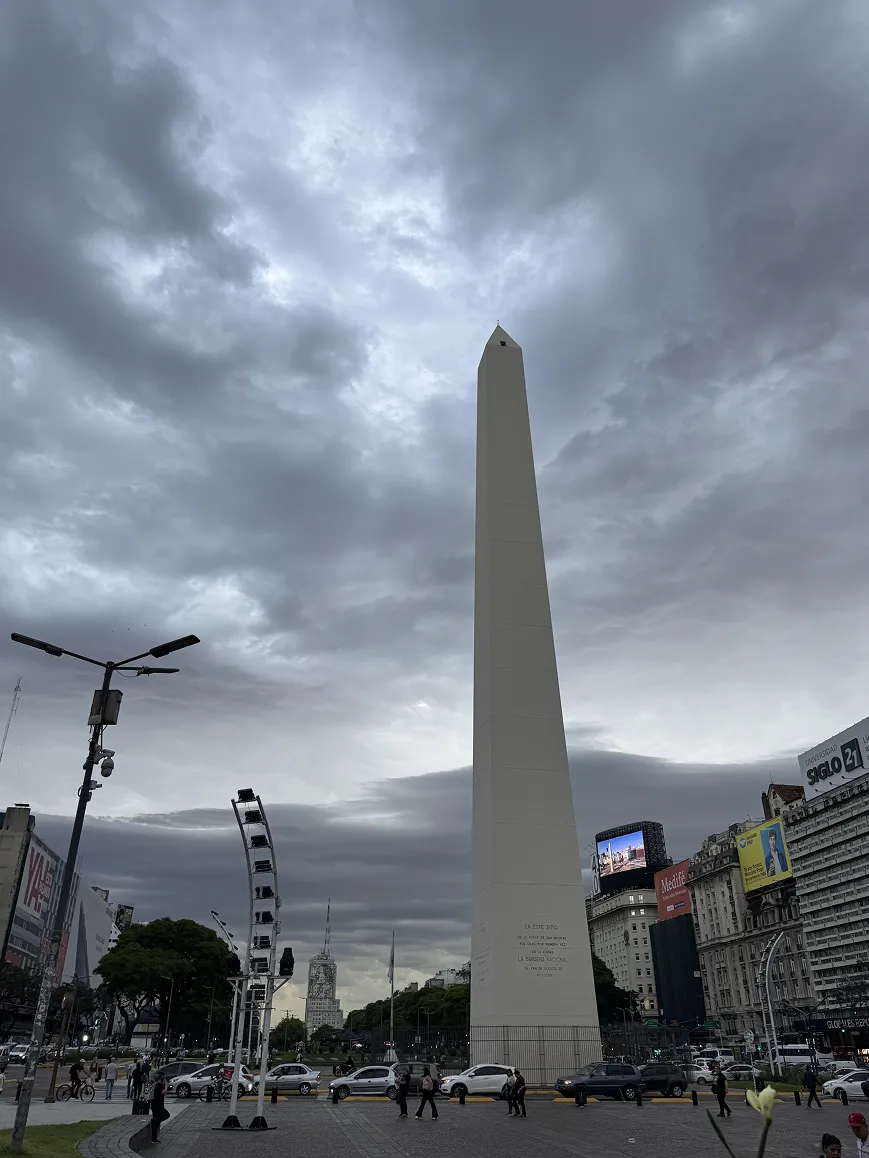 It started raining when I got off the bus, around 6 p.m.
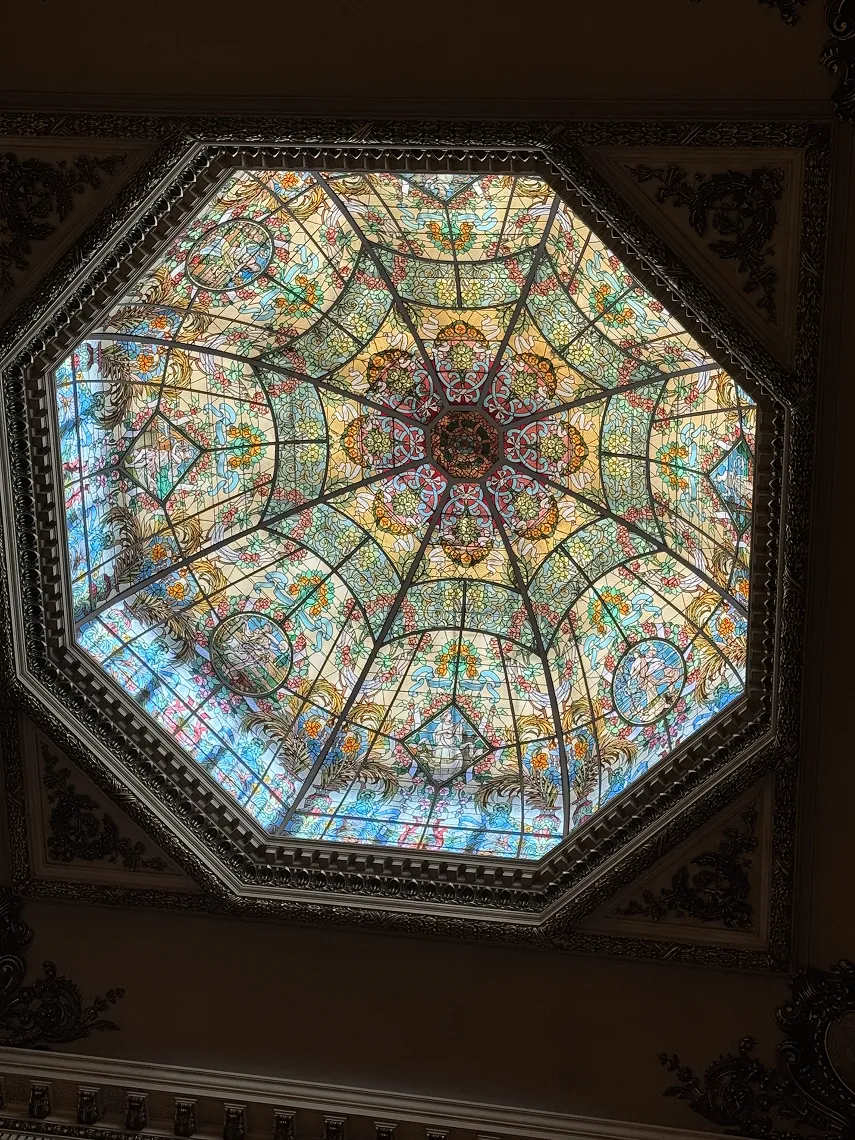
Teatro Colón is world-class. We took a guided tour (book online). It takes about 90 minutes and shows you the incredible architecture and decor before letting you sit in the auditorium.
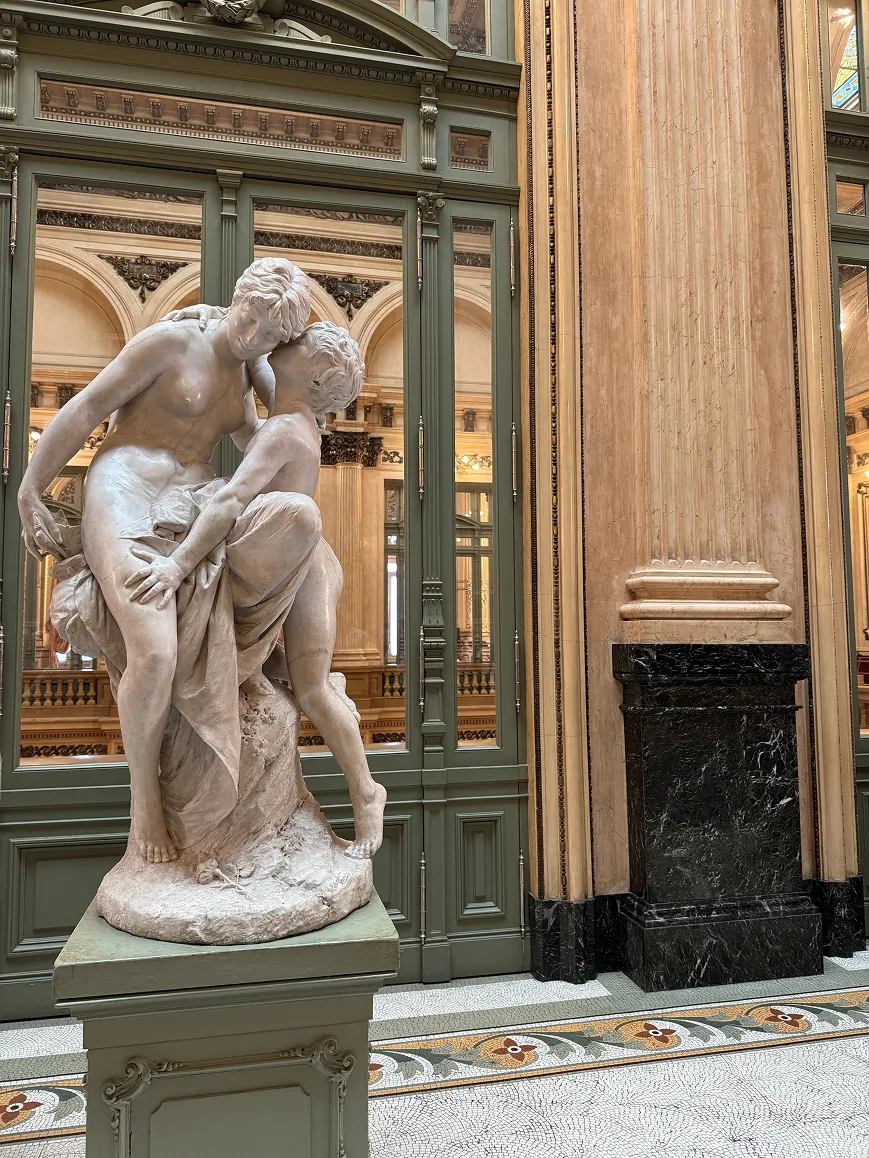 This is a replica; apparently, due to improper transport, a finger of the statue was broken off.
 A panoramic view of the entire hall; it’s said you can even go to the top floor for an experience.
Recoleta Cemetery was a highlight. I stumbled upon it while waiting for a Mate tea class. It’s a famous cemetery for the elite, including former presidents and the famous Eva Perón (Evita). Her face is on the 100 Peso note.
![]100.png) Luckily, I still had a 100 in my wallet.
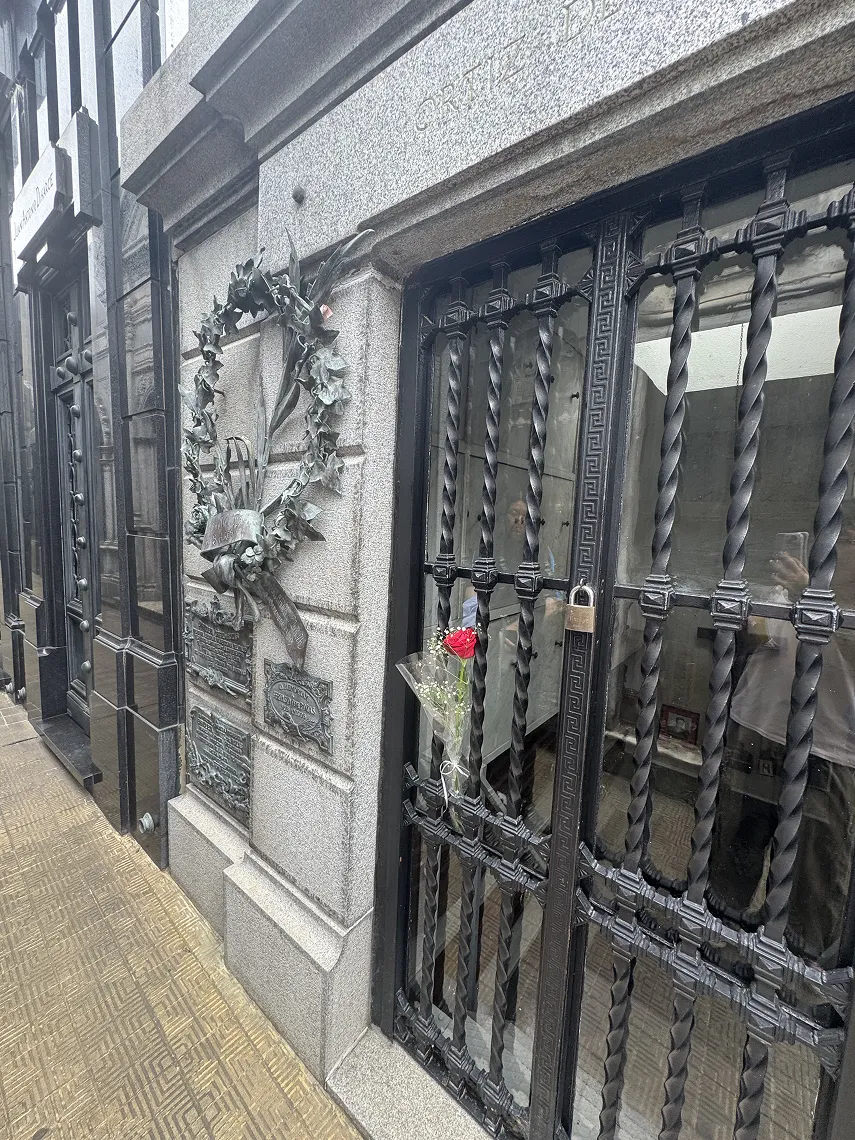 这个家族墓碑门插了一朵🌹引发了我的好奇;这里葬着 Juan Manuel de Rosas——阿根廷19世纪的强权领导人;联邦派标志性颜色是深红色,红色玫瑰花就成为了对罗萨斯本人及其政治运动 (Rosismo) 的一种强烈的、非官方但普遍被理解的致敬和怀念的符号。
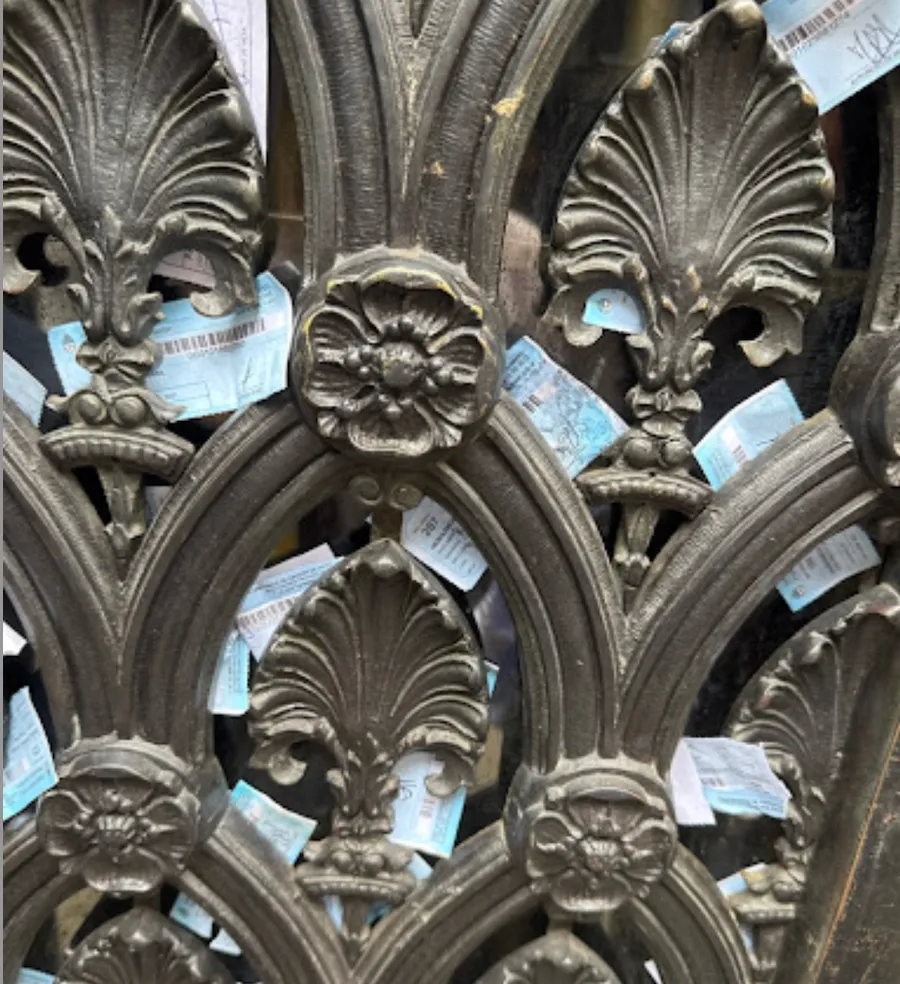
I stood before Evita’s family tomb and noticed blue tickets—apparently wish tickets. The blue ones are supposedly more expensive.
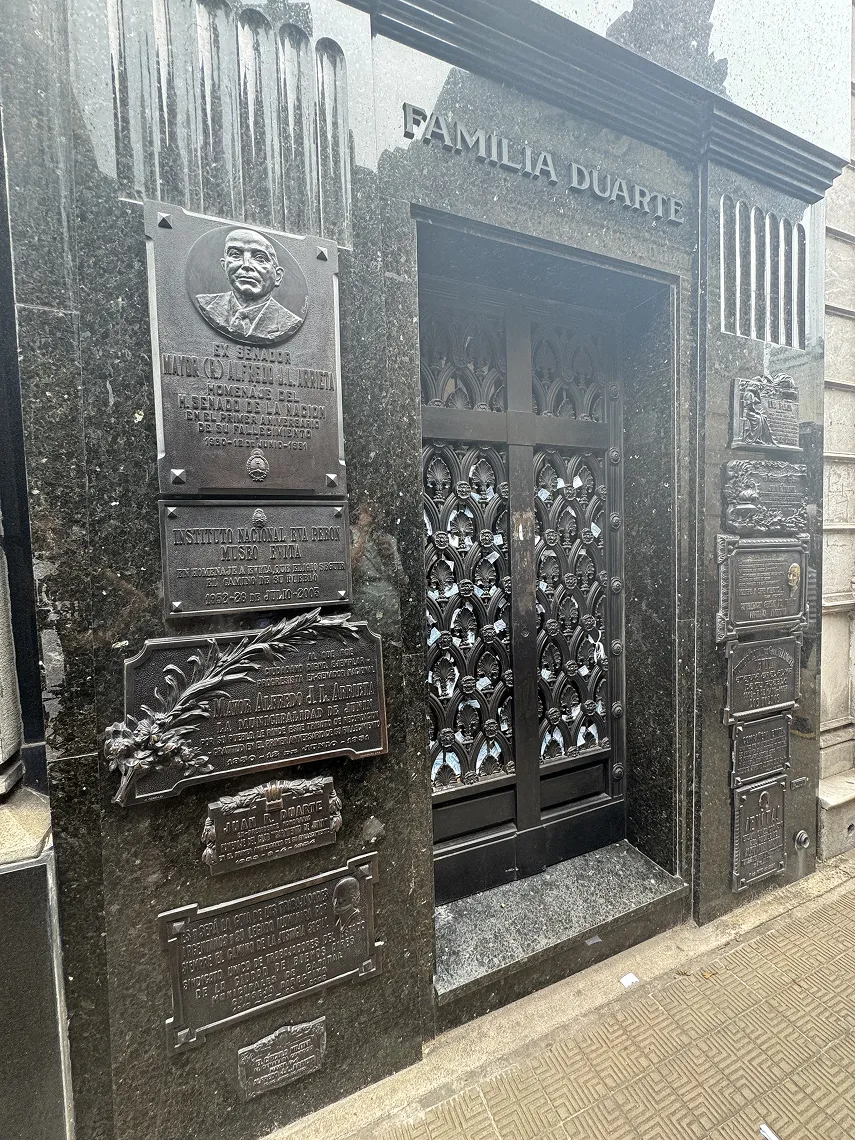
 The contrast between the pristine, grand tombs and the crumbling, abandoned ones is striking. It makes you wonder if these famous people knew they’d be a tourist attraction one day. Now, some tombs are just bird nests, while others have trees growing out of the cracks. Nature taking its course.
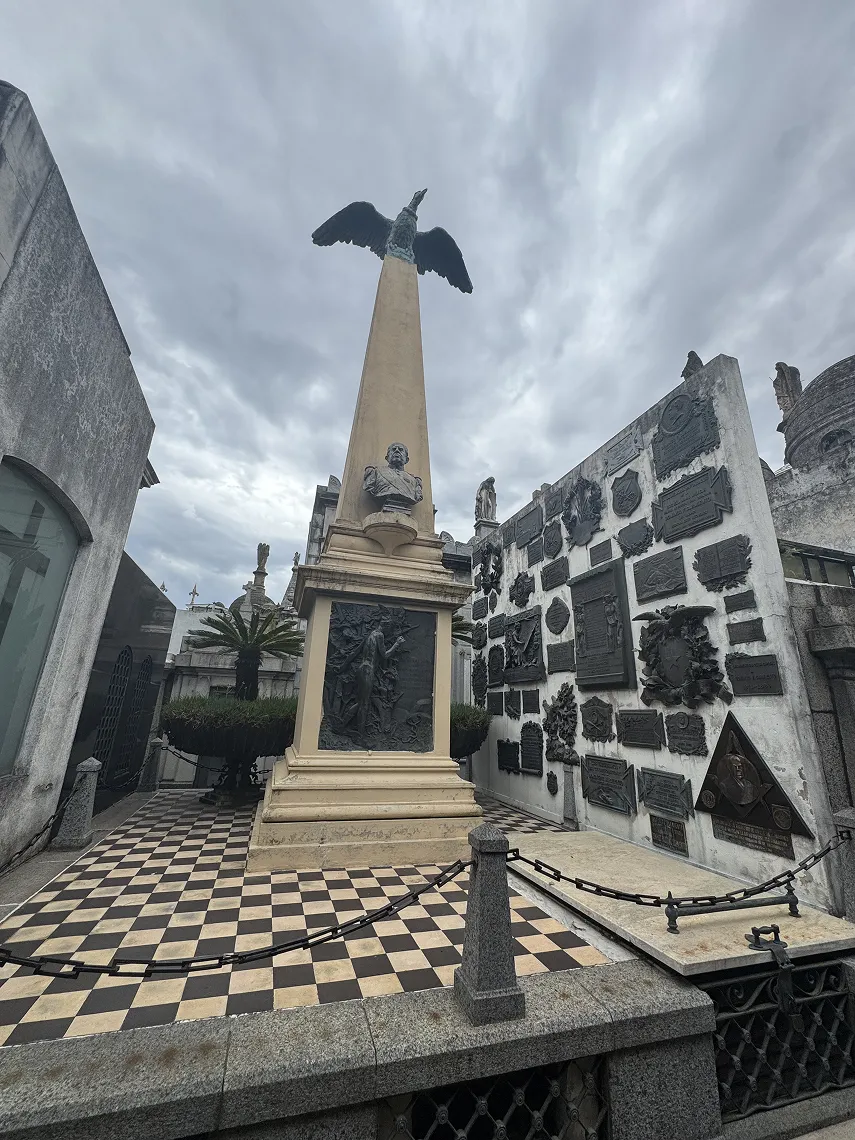 This is Domingo Faustino Sarmiento, the seventh president of Argentina, whose symbol is the bald eagle.
V and I discussed what we’d want on our own tombstones. I said “Rebellious.” She laughed and said hers would be: “If you are reading this, I will hit you.” I suggested: “If you are reading this, I am watching you.” We both cracked up.
El Ateneo Grand Splendid is the famous bookstore in a converted theater. It’s pretty, but they had just repainted when I went and the smell was overwhelming, so we just snapped a few photos and left.
El Rosedal Garden was a pleasant surprise. I joined a morning run nearby (and failed miserably, walking after 1km). The park is full of locals exercising. With the Jacarandas in bloom, green grass, and geese everywhere, it was incredibly peaceful. Just watch out for the goose poop.
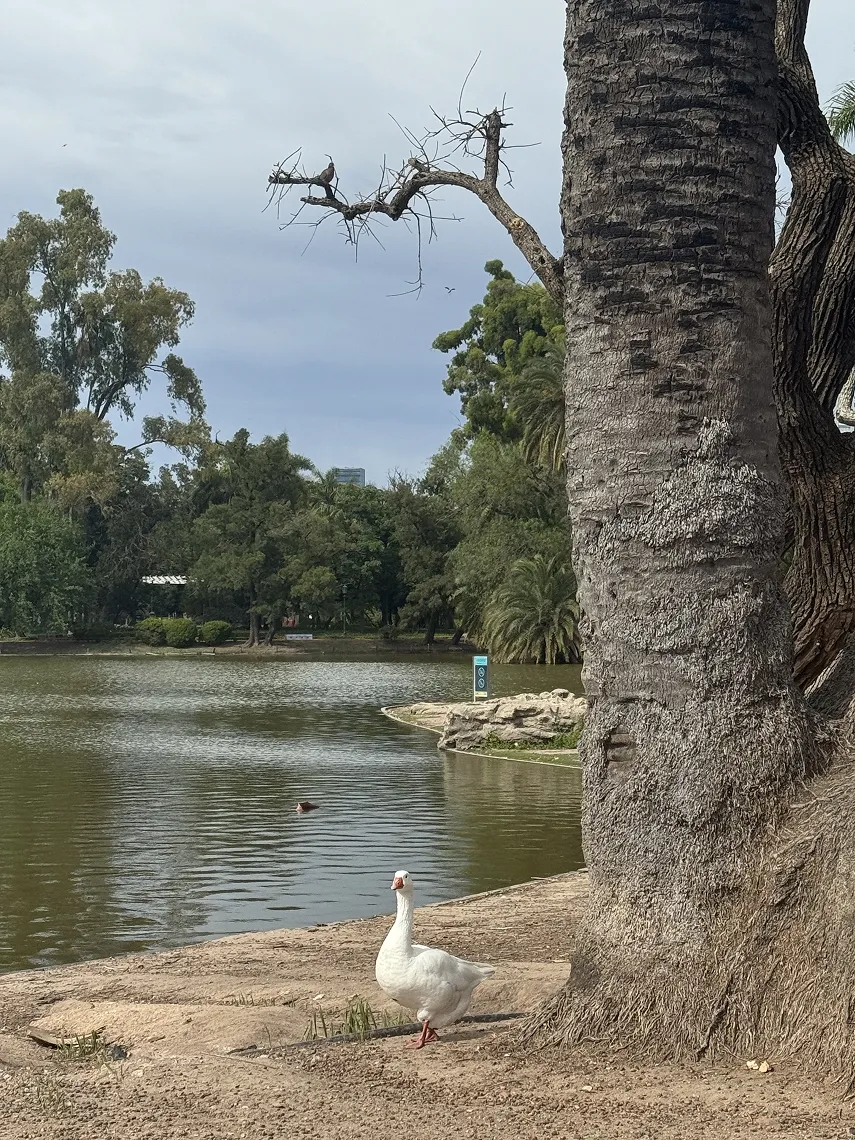
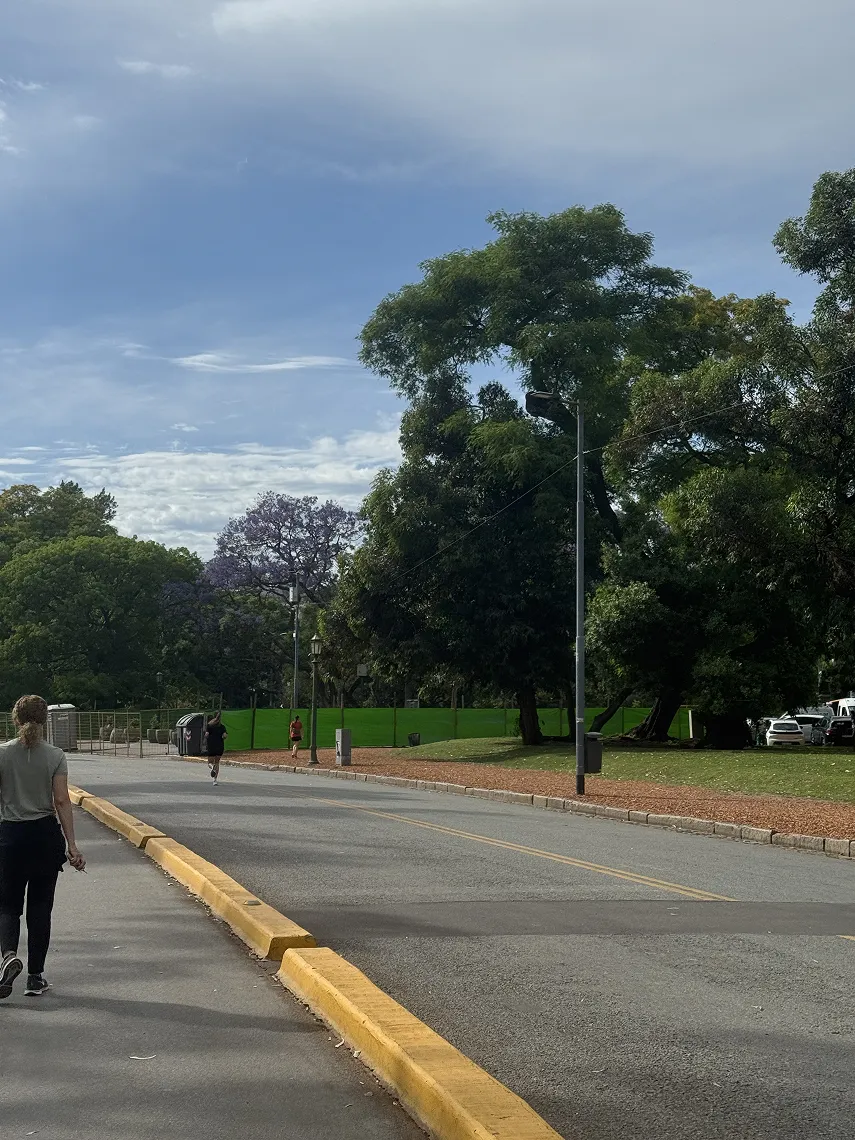 Around 8 a.m., many people were running and walking their dogs.
The National Historical Museum was a bit of a letdown. My friend and I realized that Argentine history basically starts in the 19th century. The indigenous history has largely been erased. It’s a nation of European immigrants. Even our Uber driver in Bariloche later lamented how short their national history feels.
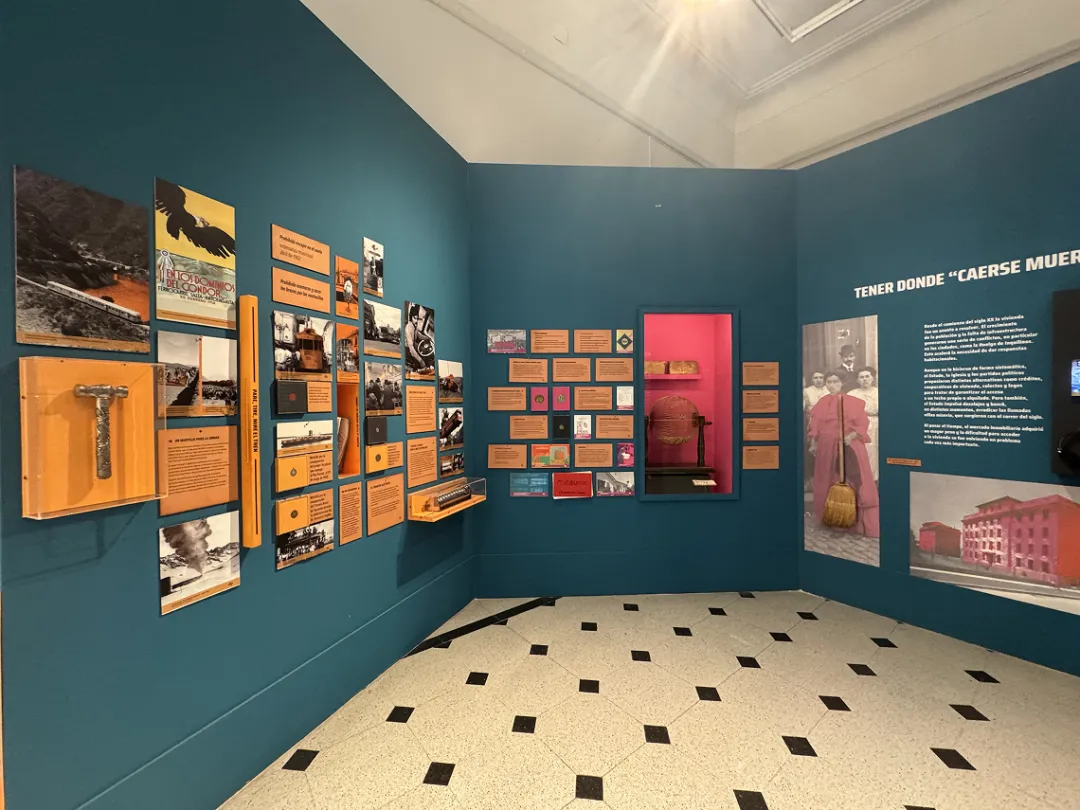 I really like this kind of media color scheme that has a strong visual impact.
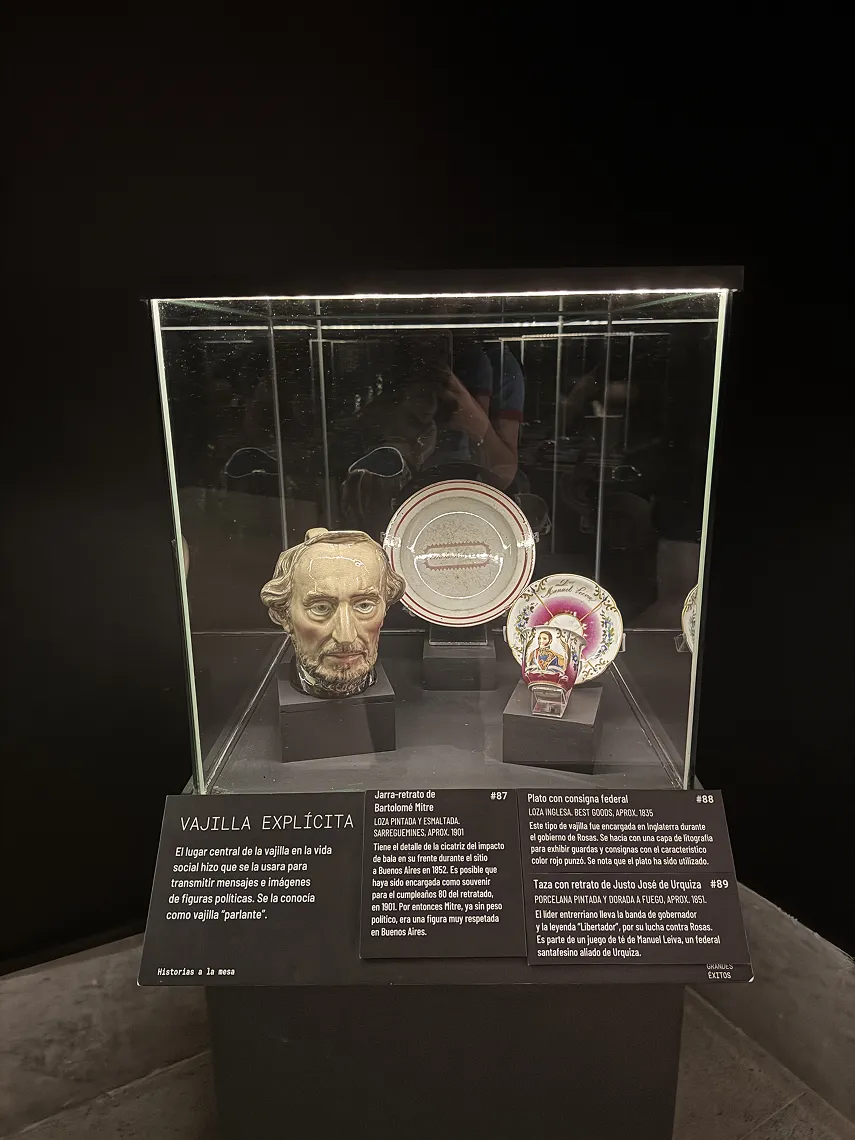 It seems like celebrities being made into merchandise really has a powerful promotional effect, lol.
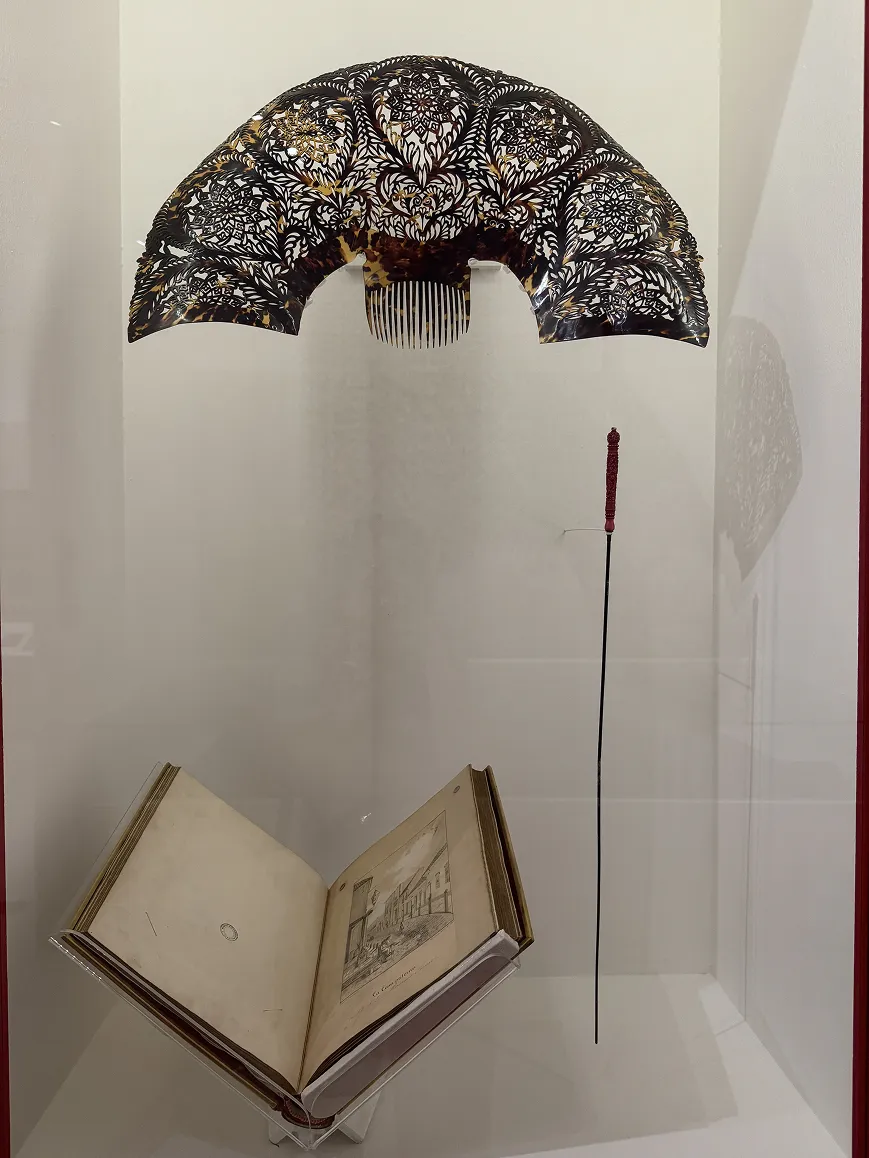 Based on my knowledge of ACM in Singapore, this is indeed a tortoiseshell product, a women’s accessory, where large/tall is considered beautiful.
I missed out on La Boca, which is a shame. A friend of mine wandered off the tourist path in La Boca looking for a bathroom. A local stopped him and warned him to turn back because it was too dangerous. He narrowly avoided trouble.
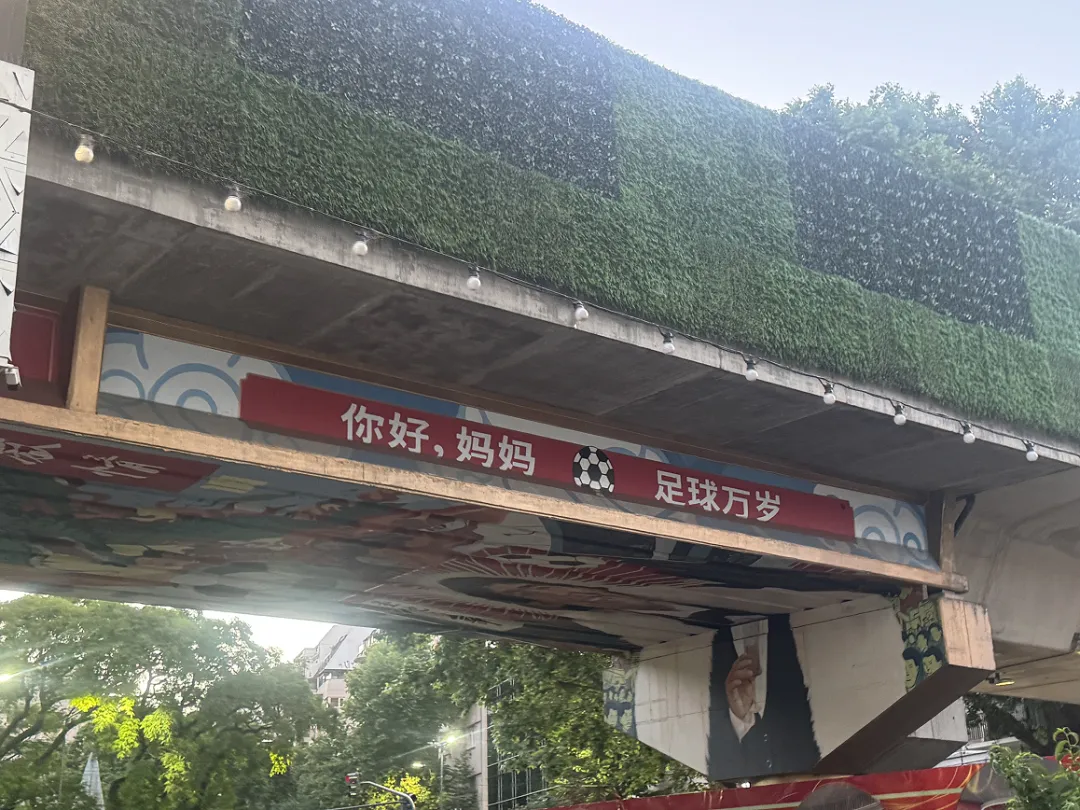 A corner of Chinatown
Another “brave” move: don’t wear the wrong jersey. The same friend bought a River Plate jersey and wore it in the Boca neighborhood until someone warned him to take it off. Football is life-and-death here.
Despite the warnings, I met so many kind people: a lady who helped me translate my grocery list for the butcher, and an old grandmother who asked if we needed help while we were waiting for our Airbnb host. BA has a real warmth to it.
Finally, the Mate (🧉) experience. It’s the national drink. We took a class near Recoleta. We learned the ritual: the cebador (server) prepares the tea in a mate (cup) with a bombilla (metal straw) and passes it around the circle. Traditionally, everyone shares the same straw. I didn’t mind, though I was the first one to drink anyway.
The key is the yerba (tea leaves). You fill the cup 2/3 full, shake out the dust, tilt the leaves, insert the straw (never move it!), and add hot water. We tried original, berry, and chocolate-coconut flavors. The chocolate one was surprisingly addictive.
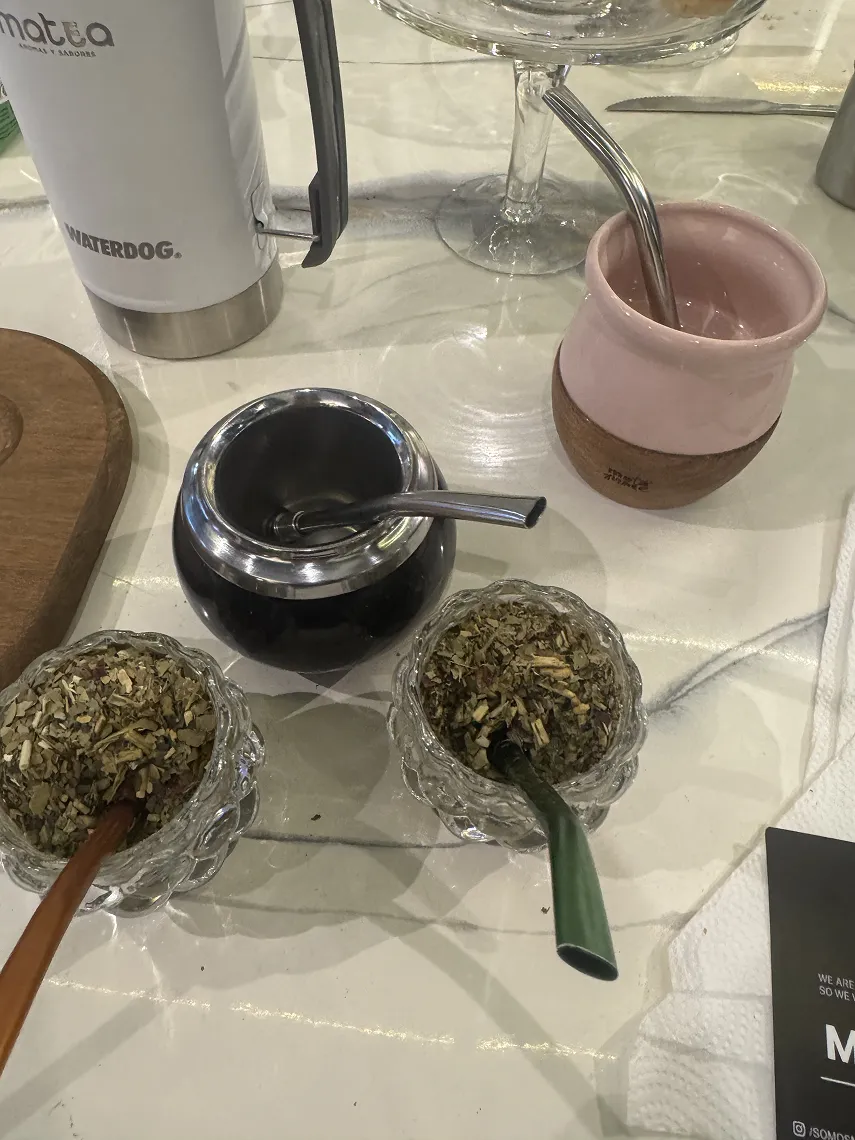 Mate tasting class location:https://maps.app.goo.gl/N8VZ37GpwCvLCszr7?g_st=it
Final Thoughts
I never expected to spend so much of this year on the road. After Berlin, Argentina was the big one. During my last few days in Bariloche, I realized I’ve found what I truly want to do, and I plan to stay in China for most of next year. My friends call me a “travel natural” because I can eat and sleep anywhere, but mentally, I’m ready for a break.
This series will be long because I want to remember everything. This was Buenos Aires; next up: Iguazu, El Calafate, Ushuaia, and Bariloche. I hope these insights help you on your own journey. Thanks for reading. See you in the next one.